
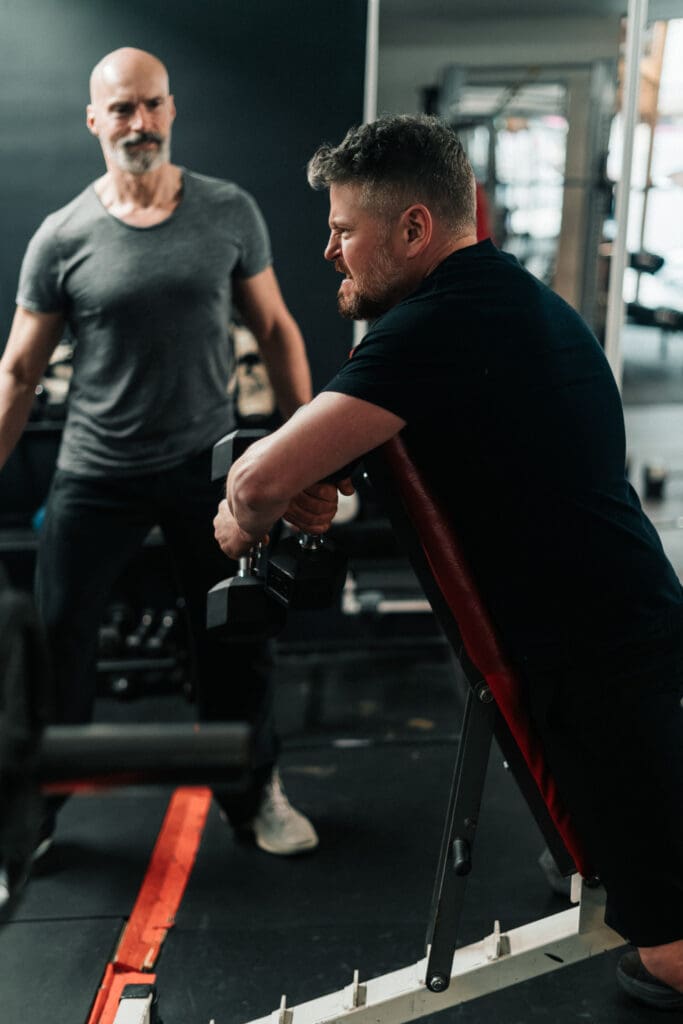

Accountability is more than being pushed harder
Many people think personal training accountability means having someone push them through intense workouts. That can be part of training, but real accountability is more practical than that.
Practical next step
Set up a weekly accountability loop
- Commit to one measurable training action before the week begins.
- Review sessions, loads and recovery at the same time each week.
- Use a predefined fallback session within 48 hours of a miss.
Good accountability means there is a plan, a scheduled time, a clear next step, and someone paying attention to whether the work is moving you forward. It reduces the number of decisions you have to make when motivation drops.
For busy Vancouver schedules, that structure can matter more than finding a perfect workout.
Why consistency breaks
Most people do not stop training because one workout failed. They stop because the routine becomes too easy to skip. Work runs late, the gym is crowded, the plan feels unclear, or the next session depends on willpower.
A personal trainer can help by turning the week into a repeatable rhythm. You know when you are training, what the session is for, and what to do next.
If crowded gyms are part of the problem, compare the gyms in Vancouver BC guide and decide whether a private gym environment would remove friction.
What accountable coaching should include
Accountability should include more than appointment reminders. A coach should connect the session plan to the goal, track progress, adjust the work, and help you make better decisions between sessions.
That might mean choosing the right training frequency, simplifying the plan, building in recovery, or changing exercises when life gets stressful.
Accountability is effective when it makes training easier to continue, not when it makes every session feel like punishment.
Private access can support accountability
A trainer can help you build the plan, but the gym environment still has to support it. If every independent workout is crowded, rushed, or confusing, accountability becomes harder to maintain.
PowerBox combines personal training with private gym access for approved members, so some clients use coaching to build confidence and private access to keep the routine going between sessions.
That blend can be useful if you want structure without relying on a coach for every single workout.
How to know whether accountability is the missing piece
Accountability may be the issue if you know what to do but do not do it consistently, if you restart every few months, or if your workouts change randomly without a clear progression.
It may also be the issue if you train hard for short bursts but struggle to build a normal weekly rhythm.
To compare coaching options, start with the best personal trainer Vancouver guide or ask PowerBox about a visit.
Useful next steps
- Review PowerBox personal training in Gastown Vancouver
- Book a visit or ask about the right starting point
- Explore personal training at PowerBox
FAQ
How does personal training create accountability?
Personal training creates accountability through scheduled sessions, a clear plan, progress tracking, coaching feedback, and practical next steps between workouts.
Is accountability useful if I already know how to train?
Yes. Many people know enough to train but still benefit from structure, progression, and someone helping them stay consistent.
Can private gym access improve consistency?
Private access can help if crowds, waiting for equipment, or limited hours are part of the reason you miss workouts.
Does PowerBox offer both training and private access?
Yes. PowerBox offers personal training and private gym access for approved members at its Gastown Vancouver location.
A weekly accountability template
- Plan: Put two or three realistic training windows in the calendar.
- Minimum: Define the shortest useful session for a disrupted day.
- Record: Track attendance, key exercises and one recovery note.
- Review: At the end of the week, identify the real reason any session was missed.
- Adjust: Change the schedule or plan before relying on more motivation.
Use a missed-session protocol
One missed session should not turn into an abandoned week. Decide in advance whether the session moves to the next day, becomes a shorter version, or is skipped while the remaining schedule stays intact. The protocol removes the need to negotiate with yourself when the week becomes busy.
Coaching can provide structure and feedback, but it cannot guarantee adherence. The useful goal is increasing your ability to make and adjust good training decisions independently. The broader Canadian movement guidelines are a population-level reference, not a promise that one supervision model works for everyone.
Review the accountability system every four weeks
Use a short review to distinguish a planning problem from a coaching or recovery problem. Count planned sessions, completed sessions, shortened sessions and sessions missed without a fallback.
- Appointments are repeatedly missed: test a different day, time or route before adding more sessions.
- Appointments happen but independent sessions do not: simplify the independent plan and confirm the first exercise, expected duration and minimum version.
- Attendance is steady but progress is unclear: improve the training log and agree which repeatable measures will be reviewed.
- Training is steady but recovery worsens: review total workload and seek appropriate professional guidance for health concerns instead of treating more pressure as the answer.
One four-week snapshot does not prove why a routine is working or failing. Choose one practical adjustment for the next review period, record it and keep the rest of the system stable enough to evaluate.